
GASTROINTESTINAL TRACT
BODY FUNCTIONS
Function and structure
Overview of the human digestive tract.
The enzymatic digestion of food, the absorption of nutrients and water, and the elimination of indigestible or non-recyclable food constituents take place in the digestive tract. In addition to enzymes, various micro-organisms are involved in the digestion, which are grouped under the term intestinal flora.
The large digestive glands, the liver together with gall bladder and the pancreas, produce digestive juices that split the food into its constituent elements. The function of the lowest part of the digestive tract is mainly the absorption of water and the elimination of the indigestible food components.
The digestive tract can be divided into a head and a trunk section.
- Head section: Here, the mouth, teeth and oral cavity are used for food intake and crushing. Salivary glands produce saliva, which renders food digestible and contains amylase, an enzyme which breaks down amylum (starch). The pharynx (throat) is linked to the esophagus where food and the respiratory tract meet.
- The trunk section is comprised of:
- The esophagus through which food is transported from the mouth to the stomach.
- The stomach: pH = 2, converts the food into pulp and enriches it with gastric juices. Here, 15% of proteins are broken up by pepsin.
- The small intestine, of which the duodenum is the first part, is where the bile duct ends. Bile juices combine with pancreatic secretions to breakdown protein and fat, and the bile itself which is also responsible for the breakdown of fat. It also contains the jejunum and ileum where proteins are now divided into peptides, fats, carbohydrates and vitamins and water are absorbed.
- The colon where faeces is stored for defecation and water and electrolytes are absorbed.
- Anus from where faeces is eliminated.
Through evolution, the digestive tract has evolved optimally to the human diet. It has the dual purpose of being an anatomical feature while, at the same time it is the centre of nutrient splitting microorganisms.
Abdominal pain is one of the most common recurring acute and chronic pains. Since its causes can stem from very different factors, it often presents a major challenge for medical diagnosis. In medical jargon, these pains are grouped under the general term “abdominal complaints”.
There are different types of abdominal pain. Stomach colic is one example; another is a general, dull pain affecting the entire abdominal region. Sometimes there are other symptoms including fever, diarrhoea, constipation, bloating, or even vomiting. In severe cases, where there is bleeding, a physician must be consulted immediately.
ILLNESSES
Complaints
Poor digestion often leads to flatulence, bloating, feelings of pressure and nervous discomfort in the stomach and gastrointestinal cramps.
One of the contributing factors is the over-prescription of proton-pump inhibitors (PPI), the side effects of which affect the gastrointestinal tract and thus, infections such as enteritis, caught through salmonella or campylobacter, occur about three times more frequently following the use of PPI. This can be explained by the loss of the natural acid barrier.
Other gastrointestinal problems frequently arise from a stressful lifestyle. The cause here is often due to a reduced production of digestive fluids or from cramps in the otherwise smooth gastrointestinal muscles whereby the motility is lowered.
Gas accumulation in the upper digestive tract (meteorism) often leads to bloating and flatulence which is associated with an increased production of intestinal gases.
There may be several reasons for the excessive gas accumulation:
- From swallowing air through eating too quickly or consuming carbonated drinks
- Through the digestion of high-fibre foods, such as pulses, cabbage and onions
- From a poor composition of intestinal bacteria when taking broad-spectrum antibiotics or when suffering from either constipation or diarrhoea
Abdominal pain
Abdominal pains are among the most acute or chronic. Since these pains can be caused by very different factors, it is often a major challenge to produce a sound medical diagnosis. Physicians refer to them under the umbrella of “abdominal complaints”.
Abdominal pain manifests itself in a variety of ways, including stomach colic or a general, dull pain that affects the entire stomach area. Sometimes there are concomitant symptoms such as fever, diarrhoea, constipation, bloating, or even vomiting and, in severe cases, bleeding, in which event a physician must be consulted immediately.
Prevention:
- Enjoy mealtimes quietly and chew food thoroughly (half chewed, half digested!)
- Avoid large meals with a high-fat content and fiery ingredients
- Avoid eating late in the evening
- Where possible, take several smaller meals instead of a few larger ones
- Limit alcohol, nicotine and coffee consumption
- Avoid vegetables that cause bloating and unripe fruit
- Factor in an after meal “digestive walk”
CONVENTIONAL MEDICINE
With synthetic drugs only individual symptoms can be influenced such as: the binding of acids with antacids; manipulating the production of gastric acid through the use of acid blockers; the stimulation of gastrointestinal activity with prokinetics or the relief of pain through cramp-releasing medicines. Often such treatments are expensive, and they have pronounced side effects.
COMPLEMENTARY MEDICINE
- Among the medicinal plants that stimulate the production of digestive juices and thus strengthen the digestive activity are: the artichoke; boldo leaves; yellow gentian; centaury; dandelion; blessed thistle and angelica root.
- Other medicinal plants with a cramp-releasing and anti-inflammatory effect on the smooth musculature of the digestive tract are: yarrow; peppermint; melissa; chamomile; cumin; fennel and belladonna.
About 25% of the population suffer from recurring stomach aches, bloating, heartburn and gastrointestinal cramps. In order to treat these complaints, which are known as “functional dyspepsia” or “irritable bowel syndrome”, herbal medicines are used with increasing success, since the combination of the herbal ingredients has additive and synergistic effects and thus the various symptoms can be treated. About 60% of all physicians prescribe herbal remedies from time to time. Over 80% of patients have a positive image of plant remedies.
RECOMMENDED MEDICATION
Amarin – stomach drops
Amarin is a mixture of 6 herbal mother tinctures produced by the company Herbamed. Its principal use is for treating gastrointestinal ailments. This phytotherapeutic medicine has various beneficial effects on digestion: promoting secretion; relieving flatulence; acting as a choleretic and helping to relieve cramps. Colic symptoms usually disappear after about 15 minutes.
It has the following composition:
1 ml contains
| Gentiana lutea MT | 0.3 ml |
| Erythraea centaurium MT | 0.2 ml |
| Mentha piperita MT | 0.2 ml |
| Chamomilla recutita MT | 0.15 ml |
| Carum carvi MT | 0.15 ml |
| Atropa belladonna MT | 0,1 ml |
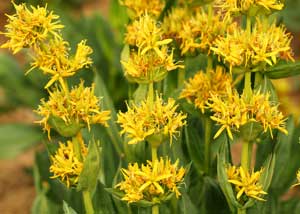
Gentiana lutea
Gentiana lutea contains the most powerful of all bitter substances. These lead to stimulation of the taste receptors through reflex thereby promoting salivary and gastric juice secretion and increased motility.
Bitter substances have another reflexive action on the taste senses through contact with the stomach lining and this is through the above-mentioned tissue hormones. The production of gastric juices is stimulated; an increase of bile is released into the duodenum and, the digestive enzyme content of the small intestine rises. This immediately enhances the appetite; hence the digestive processes, which were on low-burn during periods of poor health, now increase. Temporary diet lapses causing dyspepsia are thus alleviated.
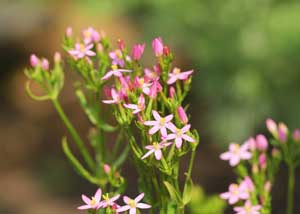
Eythrea centaurium
Eythrea centaurium also contains bitter substances and has similar properties to gentian. It eases dyspeptic discomfort and stimulates the appetite and promotes healthy digestion.
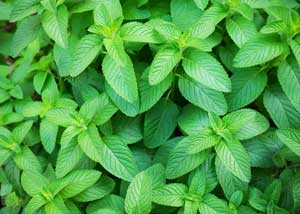
Mentha piperita
The essential oil of mentha piperita together with its astringent tannins and flavonoid glycosides have antispasmodic, choleretic, flatulence-relieving and secretion-promoting qualities similar to those of peppermint. It encourages a healthy liver.
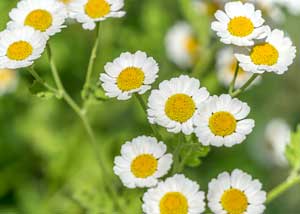
Chamomilla recutita
Chamomilla recutita has spasmolytic, anti-flatulence and anti-inflammatory properties. It also is used to treat gastritis when part of a patient-rolling technique (in german Rollkur).
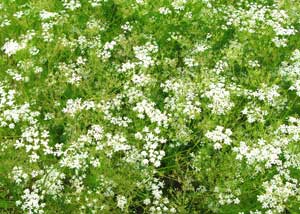
Carum carvi
The essential oil of carum carvi relieves flatuence, cramps and bloating in the stomach as well as easing indigestion and being germicidal. Through contact with the lining of the stomach, it triggers vagus nerve activity which, in turn, increases the tone of the stomach wall and thus the stomach’s rhythmic contractions become stronger. This explains the eructation of accumulated air in particular with weaning babies during feeding.
At the same time, the experiment on the guinea-pig colon shows the alcoholic extract of caraway to be spasmolytic. A correct interpretation of the results indicate that it has a counter effect against histamine and acetylcholine. Acetylcholine inhibits activity of the vagus nerve. It has been mentioned that stimulation of the vagus nerve is a mechanism for action; however, it is not uncommon for scientists working with medicinal plants to find results that are contradictory.
This sits well in a remedy, as many control circuits in the organism are antagonistically-structured. If you want to influence this situation with a one-dimensional active ingredient, it can be easy to create an overreaction. Extract of caraway is also antimicrobial. Of particular importance is the effect against helicobacter pylori which is found in the stomach and is considered as indicator for gastric ulcer and stomach cancer.
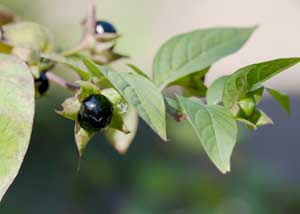
Atropa bella donna
Deadly nightshade is a poisonous plant. Many people make fun of phytotherapy as they think that phytotherapeutic preparations are unreliable because of the dosage of the ingredients.
This would be dangerous, even fatal with belladonna and in the past, this was indeed the case but now the range of concentration and quantity of active ingredients in a plant mother tincture is exactly the same as with any synthetic anticholinergic. Of course, the proportion of atropa belladonna in Amarin is carefully controlled. The subtoxic area of atropine starts at 3 mg/sd. The concentration of the mother tincture is 0.03%, in Amarin it is 0.003%. Patients would have to take 300 ml Amarin to reach the subtoxic dose. This would be the equivalent of taking 6 x 50 ml vials in one go.
The tropane alcaloides of atropa bella donna (atropine and scopolamine) work parasympatholytically and relieve cramps on the smooth musculature of the digestive tract.
Applications
Amarin can be used for gastric and intestinal problems due to secretion and motility disorders such as eructation, flatulence, feelings of fullness, stomach and intestinal cramps, an increase in appetite, a rise in gastric juice production during food intake thus providing a better disinfection of food and a more efficient absorption of iron. It helps also with: the reduction of gastric acid production when not eating; the stimulation of bile secretion into the intestines; nervous stomach ailments; the attenuation of potential muscle cramps in of the intestinal muscles and increasing the tone of the sphincter thus harmonising motility activity. It has an antimicrobial effect in optimising intestinal flora.
Thanks to the reliable deadly nightshade, relief from colic discomfort usually is noticeable after approximately 15 minutes.
Dosage
10-20 drops in water or on a sugar cube as required.
Contraindications or application restrictions
Gastric and intestinal ulcers due to an increased production of stomach juices, an irritable stomach and hyperacidity. Sufferers from high blood pressure are recommended to avoid products that contain gentian.
Side effects
No side effects are known under normal usage.