
BLADDER
BODY FUNCTIONS
The bladder is an elastic and hollow organ in the small pelvis, whose function is to store urine. Together with the urethra it forms the lower urinary tract.
The two ureters open laterally into the sides of the bladder. The urethra is the extension of the cervix. At this point there is the so-called bladder suppository, which seals the bladder from dorsal to the urethra and serves to preserve continence. The topographical relationship with the prostate makes the bladder suppository more prominent in men than in women.
The urinary bladder is used to collect secondary urine after its passage through the kidneys. It is able to store approximately 500 ml of liquid; however, the expansion receptors in the bladder wall sense an increase in tension even when half full and this provokes the desire to urinate. The maximum capacity of the bladder depends on the body size and ranges between 900 and 1500 ml.
ILLNESSES
Diseases of the bladder
One of the most common diseases is inflammation of the bladder (cystitis), which causes an infection that covers the urethra, and which may extend as far as the kidneys. It is more common in women due to the shorter urethra and its proximity to the vagina and to the rectum.
With men, a urinary discharge disorder, for example prostate enlargement or narrowing of the urethra, should be excluded. There is a burning sensation when urinating, urgency and the urine is evacuated in spurts accompanied by pain in the lower abdomen. Clinical examination will show a higher incidence of inflamed cells and the presence of bacteria. Depending on the levels, a course of antibiotics may be prescribed. As a general rule, an increased intake of fluids is recommended. Where there is recurrent inflammation and with men in particular, clarification of the possible causes should be determined.
Important medical causes of a cystitis
- Bacterial infections
- Chemical and physical stimuli: chemotherapy; irradiation; cold; catheters
- Anatomical changes, mechanical obstruction of urinary discharge, for example, urinary stones, urinary tube constrictions, an enlarged prostate, tumours
- Metabolic disorders such as gout and diabetes which can favour cystitis
- Hormonal factors: “anti-baby-pills”; menstruation; menopause; pregnancy
- General defence weaknesses: in infants and babies; in the chronically ill; the regular taking of cortisone; HIV
- Vitamin and trace elements-deficiency due to an unbalanced diet or chronic gastrointestinal problems
- Psychological stress
An irritated bladder occurs when there is a constant state of stimulus. It may be caused by hypothermia, for example, where the symptoms are a constant need to urinate but only a small amount of urine is passed. If the locking mechanism, which also involves the pelvic floor muscles, is disturbed, there is an involuntary urine discharge. With urinary incontinence, the control of the external sphincter and the inhibition of the para-sympathetic innervation fails in the short-term or it is permanent.
In the United States in particular, there is the condition known as “teacher’s bladder” which mainly affects middle-aged women working as primary school teachers or nurses because their routine only allows them to go to the lavatory infrequently during the day. The result is an extended bladder, where the senses and muscle tone no longer function normally. Those affected can retain urine for a long time, and do not notice in good time when they are overstraining the bladder. The problem can be severe and can lead occasionally to occupational disability. Where there is a weakness in the pelvic floor muscles, this can cause the bladder to sink and to protrude into the vagina.
There is a distinction between primary and secondary bladder stones. The former are produced in sterile urine when their concentration is high. One possible cause is chronic diarrhoea where fluid is lost through the intestine. This phenomenon is normally found in underdeveloped countries and often among malnourished children. The latter are formed in infected urine where there is a urinary discharge disorder, such as a prostate enlargement or a narrowing of the urethra. These stones can also be found when there are foreign bodies in the bladder such as a permanent catheter. They usually consist of uric acid or magnesium phosphates. Signs of the presence of bladder stones are pain when urinating, blood in the urine or an abrupt interruption of the urine flow where the sufferer finds that he can discharge more urine by changing position.
The diagnosis of the existence a bladder stone can be determined by X-ray or by an ultrasound scan, but to be certain a cystoscopy should be carried out. Bladder stones can be broken down into small pieces and washed out endoscopically. Sometimes, very large stones need to be removed surgically. If a stone formation was found to be the cause of a urinary obstruction, then this must also be dealt with, for example through prostate surgery as a second resort.
Urinary incontinence
Urinary incontinence refers to the involuntary and uncontrolled loss of urine. It is relatively common, affecting around 15% of women between the ages of 30 and 40, 25% of women between 40 and 50. More than 60% of patients in nursing homes complain about some form of loss of control. It is rarer in men, but still occurs more frequently with age.
COMPLEMENTARY MEDICINE
Herbalism provides several sure and effective ways to treat. Among the most important medicinal plants for cystitis are:
- Goldenrod (solidago virgaurea) whose action is spasmolytic with a diuretic and anti-inflammatory effect
- Capuchin cress (tropaeolum majus) as a mild antibiotic
- Horseradish (aromatica rusticana) as a germ inhibitor
- Bear grape (arctostaphylos uva ursi) which has an antibacterial function
- Arable horsetail (equisetum arvense) is effective against bacterial and inflammatory urinary tract diseases. It increases the urine flow and has anti-inflammatory properties
- Indian kidney tea (orthosiphon stamineus) has a diuretic and a spasmolytic-relieving effect
- Birch (betula) is used for the rinsing of the urinary tract affected by bacterial and inflammatory diseases; it acts as a diuretic
- Nettle (urtica dioica) is also used for its rinsing properties
- Fumaria officinalis has a mild spasmolytic effect in the lower urinary tract
RECOMMENDED MEDICATION
Solidin – phytotherapeutic bladder and kidney drops
Solidin contains 4 phytotherapeutic mother tinctures, which promote increased water excretion through the kidneys and at the same time act as a disinfectant. Solidin is therefore an ideal treatment in the early stages of cystitis when the use antibiotics would be premature.
1 ml contains
| Solidago virgaurea MT | 0.5 ml |
| Arctostaphylos uva ursi MT | 0.2 ml |
| Echinacea purpurea MT | 0.2 ml |
| Orthosiphon stamineus MT | 0.1 ml |
The individual components have the following effect:
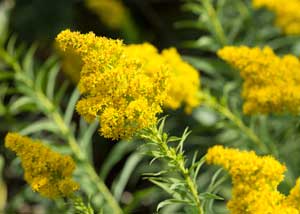
Solidago virgaurea
The diuretic effect of the goldenrod is attributed to its saponins’ content. In addition, this solidago extract reduces the permeability of the vessel walls and at the same time provokes an increase in vascular resistance. Additionally, the ingredients leiocarpus and virgaureoside have proven anti-inflammatory, mild spasmolytic and analgesic properties.
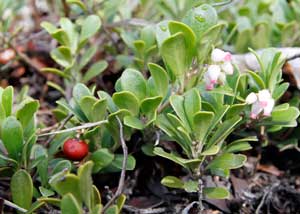
Arctostaphylos uva ursi
The phenol glycosides of the bear grape, most notably arbutin, have an antibacterial effect, especially against bacteria that cause urinary tract infections. From arbutin, through glycoside- splitting, hydroquinone is released which has an anti-bacterial effect. Arbutin acts effectively as a prodrug of the relatively toxic hydroquinone; thus, the noxious effects of hydroquinone cease to be relevant as they are rapidly detoxified.
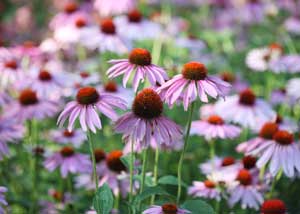
Echinacea purpurea
The lipophilic alkyl amides and echinacosides of the coneflower also stimulate the immune system; they have an antimicrobial and anti-inflammatory effect.
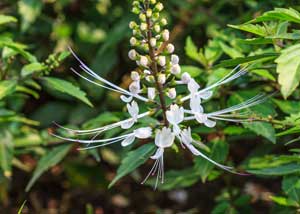
Orthosiphon stamineus
Orthosiphon stamineus is used as a diuretic and for easing cramps and in therapy for its flushing effects against urinary tract infections and kidney semolina. Most probably, this can be explained by the presence of terpenes, saponins and flavonoids whose extracts are anti-microbial, anti-inflammatory and visibly diuretic. The present caffeic acid and rosmarinic acid have bacteriostatic properties.
Indications
Increased excretion of water, especially in connection with metabolic disorders, connective tissue weaknesses with oedema.
Side effects
No side effects are known when the correct dosage has been followed.