
THE FEMALE MONTHLY CYCLE
BODY FUNCTIONS
Purpose and Control
The female menstrual cycle is a process that takes place in the woman’s body from puberty to the menopause every 21 to 35 days. That is why it is referred to as a monthly cycle. In mammalian females, this cycle occurs only once or twice a year. It serves to prepare the female body for a pregnancy. The organs concerned are the two ovaries, the two fallopian tubes and the uterus. The monthly cycle is controlled by the hypothalamus which is a part of the diencephalon, the posterior portion of the pituitary gland, a hormone gland found in the brain, as well as by the ovaries. During the process, the luteinising hormone (LH) and the follicle-stimulating hormone (FSH) are released in the brain. These in turn cause the production of the hormones estrogen and progesterone in the ovaries. These 4 hormones affect each other in this cycle and their formation is controlled by a so-called feedback.
Duration
Between the first, in puberty (menarche), and the last menstrual cycle of a woman in the menopause (climacteric, change), the average woman experiences about 400 menstrual cycles. The duration starts with menstruation (monthly bleeding) and ends the day before the next menstrual period; therefore, the first day of menstruation is defined as the first day of the cycle. This first day as described is not the same as the first day of the four phases of the menstrual cycle below. The length of a cycle can vary greatly. Short cycles last about 21 days and are mainly experienced by women approaching menopause though 35-day cycles are considered normal; however, in some women they last much longer. In the case of different long cycles, the first part, before so-called ovulation, is usually responsible for the variation.
Cycle phases
In the menstrual cycle, four phases are distinguished: the proliferation phase, the secretion phase, the ischaemic phase and the desquamations phase (menstruation).
1. Proliferation phase
This first phase of the menstrual cycle is called the proliferation phase. As stated above, the first day is not the same as the first day of the usual counting method. It takes place between the fifth and the fifteenth cycle day. Through the influence of FSH, one egg is created in one of the two ovaries. A so-called follicle containing the egg is formed. The estrogen produced in the ovary leads to the reconstruction of the uterine lining, which was shed during menstruation. This mucous membrane is called endometrium. Estrogen also causes an opening of the entrance to the uterus, the cervix, as well as a liquefaction of the mucus that is present. As a result, sperm entering the woman’s sexual organs can reach the egg more easily and fertilise it.
Ovulation
From the twelfth to the fourteenth day of the cycle, ovulation takes place as the completion of the proliferation phase, also known simply as ovulation. This is due to a drop in the formation of estrogen and an increase in the production of LH and FSH. The egg is released from the follicle and deposited in the fallopian tubes. If it does not encounter a male sperm within 12 to 18 hours, it dies. Otherwise the egg, which is now fertilised with the sperm, known as a zygote, moves into the uterus and settles in the uterine lining that is prepared for it. However, it often happens that a zygote is unable to attach itself and dies.
2. Secretion phase
The second phase of the menstrual cycle is called the secretion phase (luteal phase), which immediately follows the proliferation phase. It lasts from the fifteenth to the twenty-fourth cycle day. The egg released from the shell comprises yellow matter, also called corpus luteum. This yellow matter is controlled by LH and forms the hormone progesterone, a progestin. This causes a slight rise in basal temperature, the minimum temperature of the body during sleep. With the production of progesterone, the mucous membrane of the uterus thickens with the result that it is no longer able to absorb an egg. The cervix, the uterus entrance, tightens once more and becomes impermeable to the sperm through a plug of mucus.
3. Ischaemic phase
If the egg ejected in the fallopian tube does not hit a sperm and it dies, at the same time the production of the yellow matter regresses. As a result, only a small amount of progesterone is produced; then, there is a regeneration of the mucous membrane of the uterus. An interaction of muscles and vessels in the uterus causes a lack of blood (ischemia) in the uterine lining; thus, this phase is called the ischemic phase. As with the secretion phase, the duration is quite stable. If the menstrual cycle persists for a longer or shorter period of time, the reason is the proliferation phase.
4. Desquamations’ phase (menstruation)
The last phase of the female menstrual cycle, the desquamations’ phase, takes place in the first 4 days of the normal counting of the cycle. During menstruation, monthly or menstrual periods vary in both length and severity. Because of the lack of progesterone, the, mucous membrane in the uterus is washed away and expelled, hence the bleeding.
For some women, this lasts only two to three days; for others, the duration may be as long as six days or even more. There are women who have very little bleeding, and others are often found to be anaemic because of the severe bleeding. On average, a woman loses about 50 ml (1/2 decilitre) of blood during the desquamations’ phase. A new mucous membrane is formed on the damaged surface as a new proliferation phase begins.
Pregnancy
When a fertilised egg is encased in the uterine lining, the pregnancy lasts for about 9 months. During this time, no menstrual cycle takes place. Before childbirth, the cervix mucus
becomes impermeable during the secretion phase to prevent further pregnancy. After birth, the hormone prolactin in the mother leads to the production of milk. At the same time, this hormone suppresses the recreation of LH and FSH. If, however, the concentration of prolactin decreases towards the end of breastfeeding, the now increasing concentrations of the two cycle hormones lead to the re-establishing of the menstrual cycle.
ILLNESSES
Cycle dysfunctions
During the menstrual cycle, various changes and complaints can arise. In the context of menstruation, these can be:
- Hypermenorrhoea where there is severe blood loss and the woman loses up to 200 ml of blood.
- Hypermenorrhoea with very light blood loss lasting less than 2 days.
- Menorrhagia in cases of prolonged and extensive bleeding.
- Metrorrhagia where severe bleeding occurs over time but not during the menstrual cycle.
- Polymenorrhoea where bleeding is more frequent than normal.
- Amenorrhea where there is an absence of bleeding. There is a distinction between primary amenorrhea (no bleeding after the age of sixteen) and secondary amenorrhea (no bleeding during at least three months) and physiological amenorrhea which occurs during infancy, pregnancy and lactation.
There can be various reasons for these cycle dysfunctions and they should be clarified by a medical doctor. The absence of the menstrual cycle, indicated by a lack of menstruation (amenorrhea), indicates a hormonal disorder or the under-functioning of an organ such as the adrenal or thyroid glands.
If the production of estrogen is disturbed, no follicle maturation can occur and there will be no ovulation. This also leads to a lower production of progesterone. As a result, the uterine lining is not properly formed, and menstruation does not take place. An exception arises when sufficient estrogen is in fact produced and a follicle develops. After ovulation, however, there is a lack of progesterone. This leads to the structure of the uterine lining being not sound with the result that it cannot absorb the fertilised egg: nidation is not possible and the woman will not become pregnant.
The most common reasons for these dysfunctions are:
- Hormonal disturbances or hormonal changes (menopause, puberty).
- Mental stress or physical illnesses, for example. endometriosis, cervical cancer, the malfunction of the ovaries or of the thyroid gland.
- Lifestyle or daily routine: shift work; high-performance sports; eating disorders or special diets (vegetarianism).
- Medications (the “pill”; blood thinners etc.).
Cycle complaints
Many women experience complaints in connection with their menstrual cycle occurring before or during menstruation. These can be of a psychological nature, yet the symptoms manifest themselves as physical ailments.
Endometriosis
Endometriosis is a disease arising from the appearance of uterine lining outside the uterus which causes severe discomfort to the women affected. During the cycle, the lining undergoes changes as does the lining inside the uterus. The treatment is for the mucous membrane to be surgically removed.
Premenstrual syndrome
Premenstrual syndrome (PMS) that affects some women a few days before menstruation begins and disappears with the onset of bleeding. PMS is characterised by different symptoms such as headaches and chest pains as well as oedema (water retention). mood swings, irritability and depressive moods are the most common psychological symptoms.
Most physicians prescribe antidepressants to alleviate PMS. A drug based on the chaste tree, vitex agnus-castus, is often used. This is the only drug in Switzerland specifically prescribed for PMS.
Dysmenorrhea
Pain and other ailments during the menstrual period are referred to as dysmenorrhea. Commonly, these are known as period pains, menstruation pains or cycle pains. Cramps or a dull ache in the abdomen, in the area of the womb, usually occur on the first day of menstruation but can also appear one day before. The physical symptoms of the dysmenorrhea are: headaches; migraines; backache; heaviness in the legs; a loss of appetite; diarrhoea; nausea and vomiting. Dysmenorrhea can also have a psychological effect provoking a disturbed sleep pattern; mood swings; irritability, nervousness and depressive moods.
The exact reasons for PMS and dysmenorrhea are not known. With dysmenorrhea, the increase release of prostaglandin, a substance that plays an important role concerning the physiology of pain and also of inflammation, is considered to be one of the main causes of troubles arising in the uterus.
CONVENTIONAL MEDICINE
Pain relief and anti-inflammatory treatment
Conventional medicines which are very often used to relieve pain, at the same time have an anti-inflammatory effect. These include non-prescription medicines such as Ibuprofen (up to 400 mg), Acetylsalicylic acid and Diclofenac (up to 25 mg). Paracetamol has a pain-relieving, but not an anti-inflammatory effect. Those affected should find out through experience which active ingredients and which dosages best suit their needs.
Cramp-easing treatments
These provide relief against cramps in the internal organs including in the uterus. Scopolaminbutylbromid (Buscopan) is available in Switzerland without the need for a prescription. It is often used in conjunction with a painkiller.
Metamizole (Novalgin, Minalgin) is another pain soothing, cramp-easing and fever lowering medicine, but issued under prescription.
Hormonal contraceptives (contraceptives, “birth control pills”)
Many women ask their medical doctors to prescribe a hormonal contraceptive, the so-called “anti-baby pill”. The ingredients are estrogens and/or progestins, and in most cases when taken the cycle-related ailments disappear. Women do not use these hormone preparations primarily as preventatives but rather against complaints related to the menstrual cycle. While this is not officially approved by the supervisory authorities in Switzerland, it is nevertheless common in practice.
COMPLEMENTARY MEDICINE
Today, many women are looking for new treatment methods against dysmenorrhea as they are no longer satisfied with conventional medicine.
They no more subscribe to the taking of conventional monthly and non-specific acting painkillers which are often prescribed in combination with other spasmolytic medicines, and above all, they reject the use of hormonal contraceptives (“the anti-baby pill “) to relieve their menstrual problems. They often find a solution or at least prolonged relief of their symptoms in complementary medicine.
In addition to a targeted diet, acupuncture, vitamin and omega 3 preparations, homeopathy and Schüssler salts, dysmenorrhea can also be treated by phytotherapy, for example herbal medicines: various medicinal plants can be helpful with menstrual disorders.
RECOMMENDED MEDICATION
Medolor – drops against menstrual problems
Medolor is a mixture of herbal mother tinctures from the company Herbamed; it has the following composition:
1 ml contains
| Petasites offcinalis MT | 0.3 ml |
| Achillea millefolium MT | 0.3 ml |
| Viburnum opulus MT | 0.15 ml |
| Atropa belladonna MT | 0.05 ml |
The individual components have the following effect:
Petasites officinalis
Petasites (butterbur) is a genus of the asteraceae family. Different varieties of these summer, green plants can be found in the northern hemisphere.
Petasites officinalis (synonym: petasites hybridus) was used in antiquity against ulcers and in the Middle Ages against the plague (hence its name). Modern medicine recognised its spasmolytic and analgesic effect. In a medicinal plant, the ingredients always act as together as a whole nevertheless; modern herbal research has isolated ingredients in many medicinal plants that are particularly responsible for their effectiveness. In the butterbur, these are so-called sesquiterpenes. The mother tincture of the butterbur is carefully processed whereby the pyrrolizidine alkaloids are removed.

Achillea millefolium
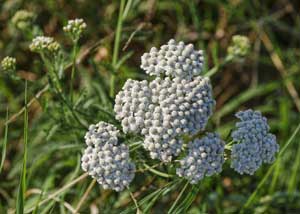
The yarrow is a perennial, herbaceous plant that can reach up to 100 cm in height. Among other attributes, it acts as an astringent and spasmolytic and anti-inflammatory (antiphlogistic) in the digestive tract and in the pelvis. Its essential oils and bitter substances are the active ingredients of the yarrow.
Viburnum opulus
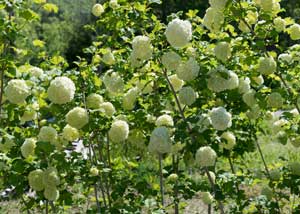
The common snowball is a shrub-like plant that is widespread in Europe and Asia. It is often used as an ornamental plant. In homeopathy, the snowball is used, among other things, against dysmenorrhea, in particular in relation to severe pain in the back and around the hips. Since there is no significant difference between the low homeopathic potencies of a medicinal plant and its mother tincture, the common snowball can be used to treat these ailments. Gerhard Madaus confirms this application in his famous work textbook of biological remedies published in 1938.
Chamomilla recutica
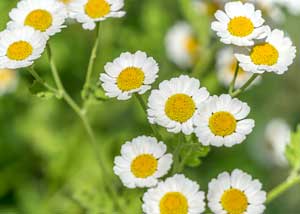
Chamomile is a member of the asteraceae family. Its original homeland is southern and eastern Europe, but today it is found almost everywhere. Chamomile has been used as a medicinal plant for centuries. It has been used in popular medicine as well as in conventional medicine to treat cramps and inflammatory ailments in the gastrointestinal tract, as well as for menstrual problems. It also has healing properties in soothing inflammations of the skin and the mucous membranes.
Atropa belladonna
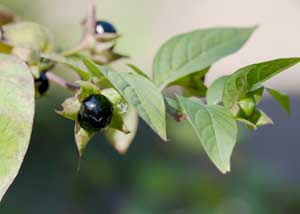
Atropa belladonna, deadly nightshade from the family of the nightshade plants, was formerly used by women in the form of drops into the eyes, which resulted in an enlargement of the pupils and thus conforming to the ideals of the times, more beautiful eyes. The active ingredients of atropa belladonna are alkaloids, atropine, scopolamine, which act as so-called parasympatholytics and thus reverse the effects of the parasympathetic. Atropa Belladonna is therefore appropriate for use in easing spasms, cramps and colic, including in the uterus.
The combination preparation Medolor provides a sensible and effective, totally natural alternative to synthetic preparations for the treatment of menstrual ailments. The various medicinal plants, which comprise the mother tincture in Medolor, complement each other (or have a synergistic effect) and exert a spasm and pain-relieving and anti-inflammatory influence. These combine to relieve the main complaints of dysmenorrhea.
The combination preparation Medolor provides a sensible and effective, totally natural alternative to synthetic preparations for the treatment of menstrual ailments. The various medicinal plants, which comprise the mother tincture in Medolor, complement each other (or have a synergistic effect) and exert a spasm and pain-relieving and anti-inflammatory influence. These combine to relieve the main complaints of dysmenorrhea.
Dosage
The usual dosage of these tinctures is to take 20 to 30 drops with a sip of water 3 times daily.
Application restrictions
People with allergies to one of the medicinal plants present in Medolor should not use the preparation.
Pregnancy and lactation
During pregnancy and lactation, the product should only be used after consultation with a medical doctor or a pharmacist.