
HAY FEVER
ILLNESSES
Hay fever (synonyms: hay fever; allergic rhinitis; pollen allergy) is a mostly seasonal allergic disease that manifests itself through various symptoms. It is estimated that 400 million people throughout the world are affected. Sufferers often experience sneezing, itching and both runny and blocked noses. The eyes can also be red and itchy as can the ears and there can be a tickling feeling in the throat. Sometimes hay fever is also accompanied by asthma.
The cause of allergic rhinitis is a hypersensitivity to various pollen, which cause an inflammatory reaction in the nasal mucosa, which in turn leads to the formation of specific antibodies (IgE antibodies). Where people suffer from an allergy throughout the year having allergic symptoms of another allergen, this may be triggered by an allergy-inducing substance, such as cat hair, house dust, etc.
CONVENTIONAL MEDICINE
Various medications are available to treat the symptoms:
- Antihistamines, corticosteroids, leukotriene antagonists and mast cell stabilizers, antiallergic (antihistaminic) nasal sprays, drops and eye drops are used. Where the allergic symptoms are particularly pronounced, these externally applicable medicines may no longer be strong enough. In such cases, the sufferer should take antiallergy tablets, which are usually effective. An unpleasant side effect however, is that they can cause fatigue which is an inconvenience in daily life. As a result, many people look to complementary medicine for a solution.
- Complementary therapies can successfully relieve symptoms, often with less frequent side effects than allopathic drugs.Desensitisation / Specific Immunotherapy (SIT) however, is still the only way to treat the symptoms of hay fever. The therapy must be started a few months before contact with the allergen and the success rate is around 50%.
To reduce the symptoms, the following tips and tricks are recommended:
- During the pollen season ventilate the rooms only briefly for longer periods during rainfall or when pollen grills are mounted on the windows.n
- Install a pollen filter in your car and be sure to change it regularly.
- Wash your hair before going to bed to remove the pollen.
- Change bed linen frequently.
- Avoid leaving laundry outdoors to dry as it attracts pollen.
- When there is an increased pollen concentration in windy and beautiful weather, it is advisable to go outside only for brief periods and to wear sunglasses.
- Drink plenty of fluids to cleanse the mucous membranes of the pollen.
- Take a supportive therapy with black seed oil capsules beginning 2 to 3 months before contact with the allergenic pollen.
- Avoid outdoor sports in fine weather.
- Take medication early to avoid a strong, pro-inflammatory response.
COMPLEMENTARY MEDICINE
Classic Homeopathy
There are homeopathic preparations that are suitable for the alternative treatment of hay fever. These include classic homeopathic preparations as well as complex homeopathy.
To determine the appropriate classical homeopathic individual remedy, a homeopathist will take note of all the symptoms of the hay fever patient and compare the clinical picture compiled with the possibilities of suitable homeopathic remedies; thus, a tailor-made application is found.
Complex Homeopathy
In many cases, such a lengthy procedure is not necessary, and an existing homeopathic complex remedy is used. Such agents contain various homeopathic substances that work together to cover as many symptoms as possible.
RECOMMENDED MEDICATION
HerbAllerg
The hay fever drops, HerbAllerg, from the company Herbamed AG contain 4 homeopathic substances and is a homeopathic complex remedy:
1 ml contains
| Apis mellifica D4 | 0.5 ml |
| Luffa operculata D4 | 0.2 ml |
| Okoubaka aubrevillei D4 | 0.2 ml |
| Thyrallis glauca D3 | 0.2 ml |
The individual components are effective against the following complaints::
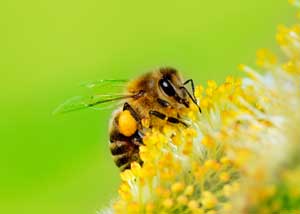
Apis mellifica
- Reddish swelling of the skin with water retention, stinging pain, burning heat, need to stay cool, sensitivity to heat and to touch.
- Swollen mucous membranes with accompanying inflammatory pain.
- These symptoms may appear unannounced.
- Anxiety in closed spaces.
Luffa operculata
- Running nose with white or yellow nasal secretion.
- General feeling of dryness.
- Strong thirst.
- Burning sensation on the tip of the tongue.

Okoubaka aubrevillei
- Eczema caused by insect bites.
- Anti-inflammatory effect on the mucous membranes.

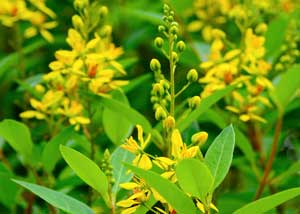
Thyrallis glauca
- Fluid coryza.
- Allergic conjunctivitis.
- Allergic reactions on the skin and to the mucous membranes.
Indications
Increased excretion of water, especially in connection with metabolic disorders, connective tissue weakness with oedema.
Side effects
When respecting the correct dosage, no side effects are known.