HEART
BODY FUNCTIONS
The heart is made up of unique muscle fibres which are electrostatically-charged on the surface. When a nerve impulse reaches the surface, the voltage discharges a small electric shock that triggers a muscle contraction. There is a short pause then an enzyme system restores the electrostatic voltage. The normal muscle fibres then wait for the next nerve impulse; however, the heart muscle fibres are not anticipating this impulse. The enzyme system is not self-limiting, but rather drives the voltage higher and higher, until the spark jumps on its own. At its quickest, this occurs through the muscle cells at a certain point in the right atrium. They discharge at pulse speed. From there, the spark spreads in a kind domino effect, in an orderly fashion over the entire heart muscle. Again, there is small pause, during which blood can flow into the ventricles. If, under specific conditions (hyperthyroidism, oxygen deficiency, an instability of the autonomic nervous system, fever or just a temporary change in the concentration of body salts) individual myocardial cells discharge faster here and there; then, there is a danger of a disruption of the heart’ s rhythm giving an extra beat.
ILLNESSES
Heart ailments of a nervous origin
There is no premium in treating heart problems arising from psychological causes. They are commonly attributed to the vivid imagination of habitual worriers who frequently are unable to describe clearly their symptoms, thereby creating yet more doubt and uncertainty.
The vegetative nervous system is the most important factor here. The para-sympathetic vagus nerve which originates in the brain, and a sympathetic active nerve network, which emanates from the uppermost part of the thoracic spinal cord, conduct a nerve fibre bundle with an enormous capacity to the heart. The sympathetic part drives the heart and relies on the information from its centres in the brain and the para-sympathetic portion inhibits it, as it is controlled by other centers. In this way, the hypersensitive muscle cells have to distinguish between a pulse of 50 beats per minute and 108 beats per minute. Minor anomalies are commonplace and can be found in more than half of the population. Normally, these go unnoticed as the corresponding signals of the cardiac monitoring system in the brain are filtered out as harmless background sounds.
However, if the fine-tuning of the heart’s activity does not function according to current needs, then problems arise. Where the emphasis tends towards the “sympathetic”, then enjoying quiet periods during the day and falling asleep become difficult. Those affected by palpitations or fluttering in the chest find themselves in a state of mind completely ill-adapted to dealing with the situation, for example, where there is unfounded anxiety but no obvious way to be free of it. With hypochondriacs for instance, there is a mass of information about heart disease and this, in itself, can be a trigger for these symptoms. The effect can be likened to a spinning carousel where the sufferer finishes in permanent drug therapy, which, itself, poses additional problems on the sensitive cardiovascular system.
This impasse (therapeutic confusion) can be prevented by following a simple rule of thumb: if the now evident palpitations have been apparent for a long time and they increase during periods of rest where the heart rate is less than 100 beats per minute, with fluctuations between inhalation and exhalation that can be measured, this is a vegetative dysfunction which imposes no increased cardiac risk. However, if the normal rhythm is over 100 beats per minute and the patient can clearly remember when this began, and it is not related to any mental stress as far as he is aware, then it is time to think of the possibility of certain diseases before deciding whether it is appropriate to use Corsanin drops. However, these rules of thumb are difficult to follow, and these illnesses could be any one of: anaemia; hyperthyroidism; obstructive pulmonary disease; pulmonary embolism; heart failure; myocarditis and amphetamine abuse.
There is another nervous heart ailment that has no accompanying mental symptoms. With increased physical activity, the heart rate goes up. However, if the pulse increase occurs too quickly and goes too high, this could be hyperkinetic heart syndrome.
As there is insufficient time for the heart’s other regulating mechanisms to take effect, when under normal circumstances an adequate amount of blood is transferred from the body to the heart, it continues pumping when empty; and then overreacts beating even faster, with the blood draining away more and more quickly. This affects people from a young age. They become red-faced during sports’ activities at school (and hikes with the family) and are frequently obliged to stop because they are short of breath and their heart is racing.
Arrhythmias
The above-mentioned heart ailments of nervous origin can be described as rhythm variations where the increase in rhythm causes attacks lasting from minutes up to hours with a fast but regular pulse and a heart rate of over 120 beats per minute where there is palpable weakness normally accompanied by a fall in blood pressure. There may also be a slight sensation of pressure in the chest. Those affected do not understand what is happening. Again, we can apply a rule of thumb: if the feeling of pressure or pain disappears consistently when the sufferer rests and reappears when the heart is working again, then most likely there is an angina with arteriosclerotic constrictions of the coronary arteries. If variations in physical stress have no noticeable effect, then a “correct” rhythm disorder could be present. An ECG in the event of a seizure will determine this. It may well be that there is no danger in which event Corsanin may provide the answer to this apparent therapeutic impasse.
It is almost only people over the age of seventy who are affected by a highly irregular heart rhythm subject to drastic variations. Whether these symptoms manifest themselves through a change in a sufferer’s ability to carry out normal tasks or whether they simply appear randomly, they should not be ignored. The cause is atrial fibrillation where there is a risk of blood clot formation with pulmonary embolism or a stroke. Blood thinners are the standard treatment here though other medications such as Corsanin may also help.
Heart problems can also arise when the cardiac rhythm is too low with less than 50 beats per minute. Serious athletes can have such a low rhythm though this can also be a side effect of medications such as beta-blockers (prescribed by a general practitioner in tablet form or by an ophthalmologist in drop form). Hypothyroidism is rarely the cause. It is important that a correct diagnosis is given before considering measures such as the implantation of a pacemaker. It is also important to remember that increased intracranial pressure slows the pulse. If all the possibilities are explored, even covering the rarest of causes, nearly always the answer will be found in a functional regulation disorder. A slow pulse indicates a dominance of the para-sympathetic vagus influence, a fast pulse is a sign of the sympathetic vegetative influence.
“Old heart”
The term “the ageing heart” is no longer found in today’s new medical textbooks. It has been replaced by explanations coming from a more precise diagnosis.
Expansion of the heart occurs where there is a weakness in the walls of the ventricles as well as with other tissues in the body and this is because their ability to regenerate has been reduced. This is the result of wear and tear where there are lime deposits on the coronary arteries as well as on all other arteries. This is not to say, simply because of these deposits, that we should be considering an angina. In these circumstances, lime traces can also be found on the heart valves, which are no longer able to close tightly nor to open completely to allow the blood to flow freely. The cardiac conduction system, which should ensure that all the heart muscle fibres are focused and coordinated on the next strong heartbeat, becomes defective with loose connections. The adaptation of the heart action to the alternating power needs has moved towards attenuation, because in older people, the para-sympathetic part of the vegetative nervous system takes command. The lungs are also affected as they are unable to provide oxygen to the blood as before. Additionally, as people age, they are less active; the joints are stiffer, and more time is spent sitting down, all of which means less exercise for the heart muscle. With these various changes, it is a matter of a little bit more or a little bit less; that is the consequence of the condition of “the old heart”. Taking into consideration the mode of action of crataegus, ammi visnaga, passiflora and leonurus again, it is clear that Corsanin is an appropriate medication for what was known as the “the old heart” which today is not recognised as such, but which nevertheless does in fact exist.
Coronary failure and angina pectoris
The situation here is complicated as the problems arising from coronary insufficiency, the inability of the coronary arteries to produce sufficient oxygen for required performance levels in everyday life, and angina pectoris, hypoxia-induced heart pain which disappears rapidly when stress is reduced, overlap. Arteriosclerosis is found in more than ninety percent of men over the age of fifty-five who suffer from angina pectoris. In the context of the total population, where there are no particular risk factors, angina symptoms combined with coronary weakness are only found in around five percent of people. In practice, this means that for a man over fifty-five or with a woman twenty years after the menopause and with at least one risk factor present who have typical signs of angina, the question arises about installing a stent as a preventative measure against a possible heart attack.
In all other cases, it is important to know in advance if there are any risk factors, in which event a further examination will have to be undertaken to determine the exact nature of the symptoms, whether the findings and indications suggest, for instance, a Da-Costa syndrome, a vertebral or rib blockade, oesophageal disease, a pulmonary embolism or a functional vegetative syndrome. It is important that the therapist has a creative instinct for detecting unusual causes.
RECOMMENDED MEDICATION
Corsanin – heart drops
Four medicinal plants are involved in the active spectrum of Corsanin. They combine to provide a sensible curative effect against the mechanisms responsible for the development of the heart disease. Corsanin is an ideal remedy for heart ailments of nervous origin, light heart rhythm anomalies and angina pectoris. Ideally, it should be taken in combination with chemical heart remedies; the patient should consult his general practitioner on this.
Corsanin has the following composition:
1 ml contains
| Crataegus MT | 0.6 ml |
| Amni visnaga MT | 0.2 ml |
| Leonurus cardiaca MT | 0.1 ml |
| Passiflora incarnata MT | 0.1 ml |
The different medicinal plants in this mixture have the following properties:
Crataegus
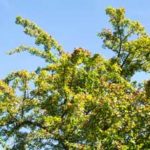
The hawthorn is a clinically well-researched medicinal plant. It improves the strength of the heart muscles and at the same time facilitates the blood flow in the coronary arteries. For muscles to perform better, they need more oxygen and an increased blood circulation is an indicator of this. There are other positive effects: the stronger the muscle, the less adrenaline it requires to function.
An excess of adrenaline puts a strain on the heart and causes a corresponding increase in blood pressure. Taking measures to avoid this reduces the risk of cardiac arrhythmia.
Ammi visnaga
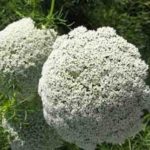
This native chervil species coming from North Africa, contains the active ingredients khellin and visnadin. Both have a cramp-easing effect on the smooth muscles. Khellin reduces the narrowing of the bronchia in asthma. Visnadin expands the coronary arteries. It reinforces the effect of the hawthorn. Corsanin is therefore a suitable medication for angina.
Passiflora incarnata
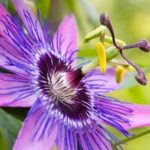
Controlled studies substantiate the passion flower’s medical effectiveness. It reduces mental stress and restlessness as well as helping with concentration and problems with falling asleep. All those who have experienced a pounding heart when under pressure, from the stress of examinations for instance, know these symptoms that are driven entirely by adrenaline.
Leonurus cardiaca
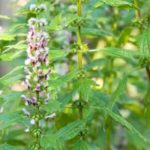
Motherwort is the most established of the four medicinal plants listed here. For a long time, it has been known to help against heart problems that are not always visible in an ECG test, but nevertheless exist and are signs of emotional pressures or troubles which can suddenly turn into identifiable physical symptoms, such as a dangerous arrhythmia or a heart attack.