
PAIN
BODY FUNCTIONS
Nervous system
The nervous system of a living being consists of nerve-and so-called glial cells. It is responsible for the reception and sending of signals within the organism and those from the outside world. Higher-developed organisms, such as vertebrates, have a central nervous system consisting of brain and spinal cord. The central nervous system (CNS) controls many of the central functions of the organism, including the transmission of pain from its source to the brain.
The nervous structures outside the central nervous system are called peripheral nervous systems. These nerves are surrounded by a connective tissue.
Somatic nervous system
FThe nervous system is functionally divided into the somatic (animal or voluntary) nervous system and the vegetative (autonomic or visceral) nervous system. The somatic is subject to our will, so we can control all arbitrary and reflexive movements. These include the movements of the extremities, joints, muscles and the sensory organs. The neurons of the somatic nervous system are associated with the cells of the skeleton, the skin and the sensory organs. The somatic nervous system is also responsible for the perception of external stimuli. It distinguishes afferent and efferent fibres. Afferent fibres provide the somatic nervous system with stimuli or sensory impressions and through efferent fibres, the nervous system sends stimuli to the skeletal muscles to control the movements of the muscles.
Vegetative nervous system
The vegetative nervous system, as its second name says “autonomic”, is not subject to our will. It controls vital functions such as the heartbeat, respiration, metabolism and digestion that together maintain our inner equilibrium; this is also called homeostasis. It provides a balanced metabolism, through which used metabolic products are made available again/recycled, but also ensures that there is no excess of the substances needed for metabolism. The autonomic nervous system also controls the hormones, the circulation, the sexual functions and the glands whose products are expelled, such as sweat glands. These are also called exocrine glands. Because the autonomic nervous system controls many vital functions, it is only subject to our will to a certain extent. For example, we can hold our breath or accelerate it but only for a few moments; however, in essence, respiration is controlled independently of our will.
Sympathetic and parasympathetic
The vegetative nervous system is further subdivided into the sympathetic and the parasympathetic. In simplified terms, the sympathetic is responsible for action and performance, the parasympathetic for recuperation and digestion. The sympathetic puts the body in a state of high readiness, for example in a predator when on the attack and in the prey when it escapes. Both enable all bodily functions that contribute to a high performance. For this purpose, heart activity and blood pressure are raised, all muscles responsible for fast movements are optimally supplied with blood and the vessels responsible for this are widened. The bronchia are relaxed for optimal lung function. In contrast, physical functions that are not directly needed run on “minimal operational power”. These include: digestion; the skin and the kidneys and the vessels that supply them are narrowed.
The parasympathetic is responsible for recuperation, digestion and excretion. As soon as the stress, attack or flight situation has subsided, the internal control activates the parasympathetic and all processes controlled by the sympathetic are now reversed.
In parasympathetic nerve transmissions, acetylcholine is the carrier substance at all ganglia (transfer points). In the sympathetic, the first impulse transmission is also taken over by acetylcholine. The impulse transmission to the target organ is then completed with noradrenaline.
Sympathetic and parasympathetic activity in practice interact with each other and create a so-called feedback, which establishes a balance, so that in the body, the active and the rest phases are in a meaningful equilibrium.
ILLNESSES
Pain
Although pain always has negative connotations, it performs a vital function for living beings, and serves also as a survival tool. Through pain, the body is informed about dangerous influences that can cause tissue damage. Without pain, we would be constantly running the risk of irreversibly damaging tissues, organs or whole parts of the body. The pain forces the organism to take countermeasures that protect it from danger. It is often accompanied by activation of the sympathetic, which can lead to higher heartbeat, deeper breathing, high blood pressure and sweating.
The nature and intensity of the pain give us indications of the causative agents that elicit different reactions in each of us:
- Motor – immediate removal of the body part from the danger area
- Cognitive – thought process of how to remove yourself from the danger zone or protect the affected parts of the body
- Emotional – fear that holds us back from further exposing ourselves to danger
- Vegetative – through a pain-induced activation of the sympathetic, the body has the ability to react in the best possible way to the pain
Acute pain.
Acute pains have an immediate effect. They include:
- All injuries
- Burns
- Headache
- Dental pain
Chronic pain
Acute pain can become a chronic pain if, for example, there is persistent tissue damage:
- Tumour pain
- Persisting inflammatory pain in the joints and tissues (rheumatism, arthritis, osteoarthritis)
- Neuropathic pain (sciatica, trigeminal neuralgia)
- Osteoporosis (breakdown of bone material)
A so-called pain memory is a feeling of pain that exists independently of tissue damage.
Chronic pain can lead to a significant reduction of the quality of life with corresponding psychosocial consequences for those affected.
Pain formation and transmission
Pain is perceived by so-called nociceptors which are free nerve endings. These are also called pain receptors. Pain mediators activate the pain receptors and generally increase their work rate. These pain mediators include substances produced by the body such as prostaglandin, serotonin and bradykinin. Nerve fibres transmit pain and the spinal cord generates a primary reflex, for example the retraction of the hand before realising that the cooking plate is in fact hot. When the transmission of pain reaches the brain, the pain in the cerebral cortex is perceived and processed emotionally in the limbic system.
Headache
The headache is one of the most common types of pain though brain tissue itself has no pain receptors and therefore cannot generate feelings of pain. With headaches, irritation of pain-sensitive areas such as the cranium, the brain nerves and the meninges occur.
There are many causes of so-called secondary headaches that come about as a result of another disorder. These include: injuries; inflammation in the nasal and sinus areas; allergies; infections; neurological causes and mental problems. So-called primary headaches have no discernible cause.
Common types of primary headache are:
- Migraines which often occur on only one side of the head and cause severe pain, sometimes accompanied by vomiting. They last from a matter of hours to days.
- Tension headaches which are accompanied by less severe pains, but which affect the whole head and are of varying length, from 30 minutes to days.
- Cluster headaches that occur on one side of the head between the eyes and the temple. These cause redness in the face and lachrymation.
CONVENTIONAL MEDICINE
Painkillers
Painkillers are otherwise known as analgesics in technical language. They suppress the sensation of pain in acute and chronic ailments.
With analgesics, several groups of drugs are available:
Acetylsalicylic acid
Acetylsalicylic acid is better known under the brand name Aspirin ® and is one of the oldest drugs still on the market. Aspirin acts against pain, reduces fever and has an anti-inflammatory effect.
Paracetamol
Paracetamol is also a medicine that has been used for decades. In contrast to all other analgesics, paracetamol is only effective against fever, but not inflammation, in addition to its pain-killing properties.
Non-steroidal anti-inflammatories (NSAIDs or NSAID)
The name of this active ingredient group comes from its chemical structure. The group has many examples such as Diclofenac (Voltaren ®), Ibuprofen or Naproxen. They are used often today against pain and inflammation. Since, with regular usage, they can lead to stomach and intestinal problems such as ulcers, they are frequently taken in conjunction with so-called protective proton- pump inhibitors.
Muscle cramps
A muscle spasm is a sudden, involuntary muscle contraction that translates into pain. When such a spasm occurs in a healthy person, this is paraphysiological and can, for instance, be a sign of physical stress, attributable, among other possibilities, to intense athletic activity. Where there are so-called symptomatic muscle cramps, an internal basic disease is responsible. There is no apparent cause for idiopathic muscle cramps.
To treat muscle cramps, the affected limbs should be raised or treated with warming preparations such as heat ointments. Magnesium preparations are also often used.
Vegetative dystonias
Many people suffer from a wide range of vegetative symptoms in the gastrointestinal tract. These are also known as vegetative dystonias. In addition to pain and cramps, other symptoms such as nervousness, restlessness, irritability, sleep disorders, respiratory problems, muscle cramps, feeling cold in the extremities and headaches occur. Often, even after thorough medical examinations, there are still no obvious causes. Sufferers go from one physician to another in the hope of finding relief. Complaints that persist more or less constantly, often alternating with each other, significantly reduce the quality of life of those affected. One explanation may be that the interaction between the sympathetic and the parasympathetic is not working as it should. Vegetative dystonias are reflections of modern life, which can be characterised by stress, little sleep, and a hectic pace.
Since no rational causes can be found, such vegetative dystonias are often treated with psychotropic drugs.
COMPLEMENTARY MEDICINE
Many patients reject medical treatments for vegetative dystonias because they do not want to use psychotropic drugs or because they have found that the results are unsatisfactory; therefore, they look for solutions from complementary medicine with acupuncture, homeopathy or phytotherapy.
RECOMMENDED MEDICATION
Dissolvin – pain drops
Dissolvin is a mixture of 5 herbal mother tinctures produced by the company Herbamed. It helps against cramps in the gastrointestinal area, headaches of various origins and toothache.
It has the following composition:
1 ml contains
| Petasites offcinalis MT | 0.3 ml |
| Cinchona pubescens MT | 0.2 ml |
| Passiflora incarnata MT | 0.2 ml |
| Filipendula ulmaria MT | 0.15 ml |
| Salix alba MT | 0.15 ml |
The individual components have the following effect:
Petasites officinalis
DThe genus petasites (butterbur) belongs to the asteraceen family. Different examples of these summer green plants can be found in the northern hemisphere.
Petasites officinalis (synonym petasites hybridus) was used in antiquity against ulcers and in the Middle Ages against the plague (hence its German name Pestwurz). Modern medicine recognised its spasmolytic, analgesic and generally soothing effects on various organs. In a medicinal plant, all the ingredients always act as a whole. Nevertheless, modern herbal research has isolated ingredients in many medicinal plants that are particularly responsible for its effectiveness. In the butterbur, these are so-called sesquiterpenes. The mother tincture taken internally is specifically freed from pyrrolizidine alkaloids.

Cinchona pubescens
Cinchona pubescens is a genus of flowering plants from the family rubiaceae. The bark of this tree is used medically as cinchona bark. In the past, cinchona bark was used for its quinine content against malaria and cramps in the calf muscles. Today, cinchona bark is still used occasionally as a bitter substance to treat anorexia and against vegetative dystonias.

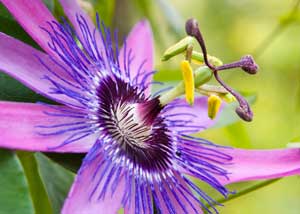
Passiflora incarnata
The Passion flower is a medicinal plant that has a soothing and anxiety-releasing effect. Together with other applications, it is used against vegetative dystonias.
Filipendula ulmaria
Filipendula ulmaria, also known as spiraea ulmaria, the meadowsweet, comes from the family of rose plants. In the past, meadowsweet was also taken for digestive problems; today it is used almost exclusively in sweating cures and to increase urine flow. Another application in folk medicine is to provide relief for the excessive gastric acid production which is often found in vegetative dystonias.

Salix alba
Extracts of the bark from salix alba of the willow plant family have long been used to treat pain and fevers. As the salicylic acid obtained from the willow bark often causes stomach problems, it has been chemically adapted to become acetylsalicylic acid, Aspirin ®, which has far fewer disagreeable side effects. Previously, extracts from the willow bark were also used against rheumatism and gout.
Application
Due to its composition, Dissolvin is useful for the treatment of neurovegetative-induced cramps and other ailments in the gastrointestinal area, especially when conventional medicinal research into the cause of the ailments have not provided any solutions. The various herbal mother tinctures complement each other and can provide relief for the symptoms described above.
Dosage
As a general rule, 20 drops should be taken three times a day with a little water.
Application restrictions
People with allergies to one of the medicinal plants present in Dissolvin should not use the preparation.
Pregnancy and lactation
During pregnancy and lactation, the product should only be used after consultation with a doctor or a pharmacist.