
RESPIRATORY TRACT
BODY FUNCTIONS
Respiratory tract
Breathing is a process through which all oxygen-consuming living creatures, including humans, absorb oxygen from the air, which is then taken into the body’s cells where it is used to support the metabolism. In exchange, the resulting carbon dioxide is expelled. To a certain extent, breathing can also take place through the skin however; most vertebrates breathe only through the lungs.
The body’s breathing apparatus
The breathing apparatus, also called respiratory system, comprises the various organs involved in the process of breathing. Firstly, there are the upper and the lower airways. Beginning in the upper respiratory tract, the nasal cavities and paranasal sinuses and the throat, the inhaled air arrives in the lower respiratory tract, passing through the larynx, the trachea and into the lungs, where the actual breathing takes place.
Lungs
The lungs are two organs located in the thorax, protected by the ribs. All mammals and other air-breathing vertebrates possess a lung. The oxygen-rich air inhaled through the nose or mouth passes through the trachea into the right or left lung. The left lung has 2 lobes, the right 3; each are composed of 19 lung segments.
Both lungs are divided into bronchia and bronchioles. In each there is a bronchial tree, which is divided into two parts within the lobes: first into the lobular bronchia then into the segment bronchia, then into the bronchioles, and finally into their extremities, which are very small pulmonary alveoli This is the last stage in the air-conducting process of the lungs. In the next section, the lung parenchyma, the actual gas exchange, takes place, the absorption of oxygen and the release of carbon dioxide. This is due to the alveoli which form alveolar sacs in groups. The total surface of the alveoli of a lung is about 140 m2.
Gas exchange
For a smooth exchange of gases to take place in the lungs, the intake of oxygen and the release of carbon dioxide:
- The lungs must expand and contract properly, ventilate.
- A regular diffusion of oxygen and carbon dioxide must be possible in the alveoli.
- The lungs must be well-supplied with blood.
ILLNESSES
These are the most important lung diseases:
- Acute or chronic bronchitis
This is an inflammation of the bronchia, which in the case of acute bronchitis is caught through infection, mostly viruses. Chronic bronchitis is caused through inhaling noxious matter such as cigarette smoke or other workplace substances. - Pneumonia
Pneumonia is an inflammation of the lung tissue, usually caused by pathogens such as viruses or bacteria. - COPD
A chronic obstructive pulmonary disease (COPD) is a chronic constriction of the respiratory tract with coughing, sputum and respiratory distress. In most instances, the COPD is caused by smoking. COPD is often accompanied by so-called extra-pulmonary comorbidities such as anaemia, loss of muscle mass, cardiovascular disease, etc. - Pulmonary emphysema.
Pulmonary emphysema is a chronic lung disease characterised by progressive fibrosis, a connective tissue that affects the lungs. - Bronchial carcinoma or lung carcinoma
Lung cancer is still one of the most common causes of deaths from cancer. - Tuberculosis
Tuberculosis is a bacterial infectious disease mostly affecting the lungs and is manifested by symptoms such as coughing, blood-containing sputum, weight loss and increased sweating. Today, incidences of tuberculosis have been on the rise fuelled by the influx of refugees.
Asthma
Asthma or bronchial asthma is a respiratory disease that occurs with seizure-like symptoms, often at night and early in the morning. Those affected suffer from coughing, shortness of breath, wheezing and a feeling of tightness in the lungs. Other typical symptoms are whistling and rattling sounds. The bronchia become narrowed and a viscous mucus appears. About 7% of adults and about 10% of young people in Switzerland are affected by asthma, and this is rising. The disease can occur in any person at any age though asthma does run in some families.
The exact cause of asthma is still unknown though they may include a genetic predisposition, allergic influences and viral infections.
Other contributory factors are:
- Irritants in the workplace, flour dust, isocyanates.
- Smoking and passive smoking.
- Environmental pollution.
- Weight problems.
- Gender.
Irritants in the workplace such as chemical scents or dust can cause asthma attacks and should be avoided. Even a pollen allergy can lead to an asthma attack. It is also well known that smoking, active and passive, increase the chances of asthma. It is essential for asthmatics to give up smoking. Pollution can provoke asthma; it occurs more frequently in areas where there are high levels of environmental pollution than elsewhere. The same is true for industrial zones where there are emission-producing factories. Gender and weight also play a role in the occurrence of asthma. The male population is more at risk than the female and the overweight have a greater chance of becoming asthmatics than those of normal weight.
Asthma provokes a chronic inflammation and hypersensitivity of the bronchia. This hypersensitivity leads to a rapid and spasmodic constriction in the bronchia after contact with what would normally be a harmless trigger.
The diagnosis of asthma is made by a medical specialist. In addition to the typical symptoms, a lung function test (peak flow measurement) will provide more information about the presence of the disease.
CONVENTIONAL MEDICINE
In the treatment of asthma, non-drug treatments as well as conventional medical drugs or complementary medical treatments can bring relief and reduce the frequency and severity of seizures.
Non-medical measures
- Avoid triggers. Every asthmatic should remember exactly what allergens and irritants can bring on an attack. Stress can also be a factor so, asthmatics should try to lead as stress-free a life as possible.
- Regular medical controls are important with an accurate follow-up by the treating pulmonologist to assess the effectiveness of the measures.
- Regular check-ups using a peak flow meter. This is a device that allows an asthma patient to check the maximum flow rate of breathing air during forced exhalation (peak flow) thus; the lung function or the restriction can be determined.
- Breathing Techniques. There are courses for asthma patients to learn breathing techniques to help them avoid attacks and cope better with seizures. Learn to inhale and exhale and to cough properly. These help to remove the fear of an attack. One can also learn relaxation techniques that together with regulated breathing, help to render an asthma attack harmless.
- Exercise. Asthma control also requires regular exercise which should be adapted to the individual’s lung capacity in order not to trigger a stress attack. Again, there are courses that can help here.
- The relationship between obesity and susceptibility to asthma has also been mentioned before, so it does not need to be discusse again here.
Treatment with conventional medicine
There is no cure for asthma but, it is possible to control the disease using the best non-medical methods together with conventional medicine. There are primarily two classes of medicines that are effective: the so-called beta-2-sympathomimetics and the glucocorticoids.
The beta-2-sympathomimetics are a special group of drugs that activate the sympathetic nervous system while at the same time, relaxing the bronchial muscle. Their effect is only brief, and they can be used efficiently during an asthma attack. In the longer-term, so-called inhaled glucocorticoids are effective which, like the beta-2-sympathomimetics, are taken using a dose metered inhaler or with a so-called discus, a multi-dose powder device.It is important to remember to use a good breathing technique and to rinse the mouth after the application of glucocorticoids to prevent oral thrush due to the immune system being weakened.
COMPLEMENTARY MEDICINE
For the treatment of asthma, it is also possible in mild cases to use mixtures of herbal tinctures or mother tinctures.
RECOMMENDED MEDICATION
Respirin – bronchial asthma drops
The drug Respirin produced by the company Herbamed gives relief against bronchial asthma. It causes a liquefaction of the bronchial secretion and relaxes the cramped bronchial tree and combines well with allopathic asthma remedies. Patients should ask their physician how to combine Respirin with corticosteroids to reduce the dosage of the latter. Respirin has the following, effective composition:
1 ml contains
| Primula verus MT | 0.3 ml |
| Echinacea purpurea MT | 0.25 ml |
| Amni visnaga MT | 0.2 ml |
| Ephedra vulgaris MT | 0.1 ml |
| Lobelia inflata MT | 0.1 ml |
| Atropa Belladonna MT | 0.05 ml |
The various medicinal plants of this mixture act as follows:
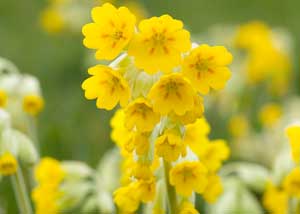
Primula veris
The cowslip is a plant native to many parts of Europe, the genus primula from the family of primrose plants. It is used in folk medicine as a cure for a productive cough. The ingredients: saponins and triterpene saponins, which help to create a mucus solution in the airways through the stimulation of the gastric mucosa, contribute to its effectiveness. A clinical trial has been carried out taking a combined preparation made up of one extract each of the cowslip and thyme (thymus vulgaris L.). This study demonstrates the efficacy of the two extracts, which leads to a reduction in coughing fits and an improvement in clearing mucus.
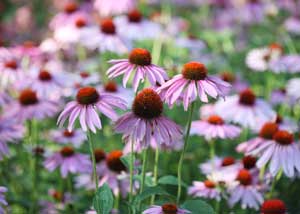
Echinacea purpurea
The coneflower, often referred to as echinacea, is a well-known and studied medicinal plant of the daisy family, whose original home is North America. It was used by the indigenous people against various complaints. In the west today, echinacea is often taken as a treatment and prophylaxis against influenza infections. This medicinal plant relieves symptoms such as fever, colds and coughs. Preventively taken, echinacea strengthens the immune system and it has been shown that the frequency and the strength of colds drop significantly.
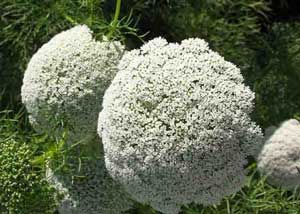
Ammi visnaga
Ammi visnaga, “the bishop’s herb”, is a medicinal plant of the umbelliferae family, which is found widely in Europe, America as well as in Asia. The Commission E, a commission of experts for the use of medicinal plants, states in the monograph on Ammi visnaga, that in folk medicine the dried fruits of the epiphyte are used for the treatment of heart complaints, but also for coughs, bronchitis and bronchial asthma.
Ephedra vulgaris
Ephedra vulgaris, is the only genus ephedra from the ephedra family. Common medical applications of ephedra include, among others, the treatment of asthma and other respiratory diseases with mild bronchial spasms because of its light sympathomimetic effect. Ingredients of ephedra vulgaris such as ephedrine are responsible for this calming influence..

Lobelia inflata
Lobelia inflata, Indian tobacco, from the bellflower family, has nothing to do with the tobacco plant despite its popular name. This has most probably come about because the Indians of North America smoked the plant, as well as used it in different medical applications as part of the traditions of their culture. The main ingredient of lobelia inflata is lobeline, which has the effect of stimulating breathing. In former times, it was used to treat asthma. Today it has been superseded in conventional medicine by synthetic asthma remedies.

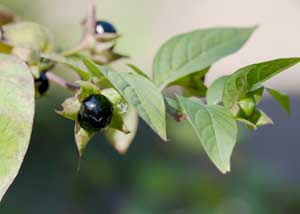
Atropa belladonna
Atropa belladonna, a member of the deadly nightshade family, was once dribbled into the eyes by women in the form of a juice, causing dilation of the pupils and thus, according to the customs of the times, more beautiful eyes. Atropa belladonna contains alkaloids that act as so-called parasympatholytics and cancel the effects of the parasympathetic; therefore, atropa belladonna is suitable for reducing spasms and colic, mainly in the digestive tract. In folk medicine belladonna is also known as an anti-asthmatic substance and again, in olden times, it was an ingredient in anti-asthma powders.
Effects
Respirin is a very useful combination of mother tinctures for the treatment of mild and moderate asthma as these tinctures complement each other. The cowslip helps to expectorate mucus. Bishop’s herb, ephedra (sympatomimetic) and atropa belladonna (parasympatholytic) act against the bronchial spasms that occur in asthma. Lobelia helps with breathing, and echinacea has a preventative effect on viral infections, including coughs, by stimulating the immune system, which is positive for asthmatics.
Alternative to cortisone treatment
Respirin is also suitable as an alternative to cortisone treatment as a complementary medicine; although, in the most severe cases, cortisone may be required. However, many physicians are often too quick to prescribe corticoids (cortisone preparations), and not only against asthma. With long-term use, cortisones can have drastic side effects, for example there can be pronounced weight gain through fat deposits in the torso as well as a muscle atrophying of the limbs and a weakening of the immune system. The skin may become very thin and susceptible to eczema due to prolonged cortisone administration; therefore, many patients look for alternative treatments. The use of Respirin may be recommended here by your physician.
Application
Respirin can be used for the prevention and treatment of mild and moderate asthma attacks, and it can be easily combined with conventional medicine, the dosage of which can then be reduced. However, this should only be done in consultation with your attending physician doctor.
Dosage
The recommended dosage is 20 drops 3 times a day in a little water. People who have a known allergy to any of the plant tinctures contained in Respirin should not use this product.
Pregnancy and breastfeeding
Since the tolerance in pregnancy and lactation has not been studied, women who are pregnant and breastfeeding should avoid using Respirin.