
WEIGHT MANAGEMENT
BODY FUNCTIONS
Nutrition
Nutrition is the intake of solid, liquid or dissolved (sometimes gaseous) substances that are needed as an energy source for the metabolism and the formation of endogenous substances. In terms of food sources, sentient beings are classified into omnivores, carnivores, and herbivores, depending on their diet. The dentition of man and the structure of his digestive system make him omnivorous and in fact most people feed on both meat and plants.
Food
The foods used for nutrition contain macronutrients such as proteins, carbohydrates and fats (lipids). In addition, there are minerals, trace elements and vitamins, which are essential for the organism. There is a small difference between specific nutrition and general foodstuffs. Water and, for example, salt are foodstuffs in a sense, but they have no nutritional value. Stimulants can be described as nutrients as however, they are not taken primarily to maintain the metabolism or the formation of the organism, but for pleasure. A typical example of a stimulant is chocolate. Spices and other substances occupy a special position: on the one hand, they serve to enhance and refine taste, but on the other hand, sometimes they have a genuine benefit.
Digestion
Digestion is understood as extraction of the nutrients from ingested food in the digestive system. In this process, food enzymes split carbohydrates, proteins and lipids, into smaller compounds. This process is called hydrolysis. With the help of the appropriate enzymes, for example amylase, different types of sugar, so-called mono or disaccharides, are produced from carbohydrates. Lipases split lipids into fatty acids. Pepsin and trypsin together with other enzymes are responsible for the breakdown of proteins to turn them into in amino acids. This allows the nutrients in the small intestine to be absorbed into the bloodstream through the wall of the small intestine where they then play an important part in the metabolism and in the composition of structural elements.
Nutritional value of the food
The nutritional value of a food is its physiological value, which is determined by the amount and the nature of its constituents and their availability to the human organism. It describes the usable energy expressed as physiological calorific value. This indicates the energy that is provided to the body when metabolising a certain quantity of a food. This nutritional value is expressed in kilojoules per gram. However, the obsolete term kilocalories per gram is still commonly used and generally, one refers only to calories per gram.
1 kcal = 4,1868 kJ
The calorific value of a kilo-calorie corresponds to the 4.1868-fold of a kilo of joule.
Nutritional value of protein, carbohydrates, fat and alcohol
1 gramme included:
| Nutrient | Kcal | KJ |
| Protein | 4,1 | 17,1 |
| Carbohydrates | 4,1 | 17,1 |
| Fat | 9,3 | 38,9 |
| Alcohol | 7,1 | 29,3 |
Fat provides more than double the nutritional value of protein or carbohydrate!
Calorie table of food
Every 100 grammes (100 ml) contain:
| Art | Kcal | KJ |
| Black Bread | 199 | 841 |
| Wholemeal Bread | 300 | 1259 |
| Croissant | 393 | 1633 |
| Kebab | 215 | 911 |
| Hamburger | 241 | 1007 |
| French Fries | 299 | 1252 |
| Trout | 150 | 628 |
| Chicken Breast | 75 | 314 |
| Pork Escaloppe | 230 | 963 |
| Fennel | 31 | 130 |
| Carrots | 41 | 172 |
| Cauliflower | 25 | 105 |
| Mousse au chocolat | 332 | 1396 |
| Milk | 47 | 195 |
| Ice Tea | 31 | 122 |
| Cola light | 1 | 4 |
| Lager Beer | 43 | 180 |
| Rice | 104 | 435 |
| Cracker | 442 | 1861 |
| Pear | 58 | 243 |
| Kiwi | 61 | 255 |
| Orange | 47 | 197 |
| Smarties | 465 | 1955 |
| Toblerone | 525 | 2200 |
Calorie requirements
A person’s calorie needs are determined by factors such as gender, age, size and how active he or she is.
- Women have a lower energy requirement than men.
- As people age, they need less energy, but the same quantity of vitamins and minerals.
- Those in sedentary professions consume much less energy than those engaged in physical work.
- The greater the mobility people have in their recreational activities, the greater their energy needs.
Calorie table requirement (kcal)
Some examples of daily calorie requirements:
- Man, 25-year-old, 190 cm, 85 kg high physical activity in work and leisure time. Daily calorie consumption: 3831.
- Man, 25-year-old, 170 cm, 55 kg, little physical activity in work and leisure. Daily calorie requirements: 2105.
- Woman, 75-year-old, 165 cm, 60 kg, medium activity level. Daily calorie requirement: 1893.
- Woman, 55-year-old, 160 cm, 45 kg, inactive in work and leisure. Daily calorie requirements: 1573.
Clearly, an active young man consumes more than twice as many calories per day as a small but inactive woman.
ILLNESSES
Obesity is a disease that occurs predominantly in the industrialised Western countries, though also increasingly in emerging nations. There are two important factors that contribute to the fact that almost every second person in the countries concerned is now overweight:
- The shift from heavy industry to services where automation is increasingly common can lead to the physical inactivity.
- The abundance of different foodstuffs, especially sweets, encourages a calorie intake that is markedly above the daily requirement. Many young people have a diet where fast food plays an important part which they consume with predominantly sweet drinks. The result is that people are increasingly overweight. Another factor is in the genetic predisposition or the family situation. A child with two overweight parents has a 75% chance of becoming overweight in adulthood.
Stress can also lead to obesity, as can the side effects of certain medications such as antidepressants, certain hormonal contraceptives and certain cortisones and antiepileptics.
Being overweight indicates a disproportionately high amount of fatty tissue in the body. In addition to the aesthetic aspect, obesity poses serious health risks and can contribute to various diseases. These include type 2 diabetes, cardiovascular disease, and tumours.
The body mass index (BMI) or abdominal circumference is the conventional measurement used to
determine whether someone is overweight.
BMI
BMI represents the ratio of the weight to the square of the body length and can be calculated according to the following formula:
BMI = KG : M2.
BMI represents the ratio of the weight to the square of the body length and can be calculated according to the following formula:
1,7 x 1,7 = 2,89; 60 : 2,89 = 20,76
The following correlations apply to BMI values:
unter 20: Underweight
20 – 25: Normal weight
25 – 30: Overweight
über 30: Obese
Abdominal circumference
The abdominal circumference is measured at the height of the navel. The following values apply:
Sex – overweight – obese
Men more than 94 cm over 103 cm.
Women more than 80 cm over 80 cm
The right time for the measurement is in the morning, before breakfast and unclothed.
BMI Calculator
CONVENTIONAL MEDICINE
Faced with being overweight or obese, there are measures to help people obtain their normal bodyweight, both with and without drugs. It is relatively easy to lose a few kilos of weight in a short apace of time; the challenge, however, is to keep the achieved level of weight and not fall victim to the so-called yoyo effect whereby the individual quickly regains the weight lost. To prevent this happening, a change in food and eating habits is needed.
Non-drug solutions
To reduce weight and to maintain the results in the longer term, the most important factor here is to make changes in one’s everyday habits. These include:
- Being aware of and enjoying a healthy diet: having enough to eat for breakfast and only a little in the evening. Eating slowly and in a relaxed fashion. Reducing consumption of sweets and fat, having small portions with more vegetables and fruit, drinking only a little alcohol and plenty of water.
- Adopting a healthy lifestyle involving sport and regular daily exercise.
- Participating in self-help groups.
- Surgical measures. With some severe instances of obesity where there has been a lack of success with slimming programmes, the so-called gastric band procedure, which reduces the stomach’s capacity, may help.
Diet preparations
A vast number of dietary preparations promoting weight loss are available today. These can be bought in pharmacies and drugstores, but also in cosmetics’ shops, fitness centres and increasingly over the Internet. However, there are dubious companies that take advantage of the lack of controls over the Internet and make extravagant but false promises about their preparations to reduce weight that they say work even while asleep or with no effort. It is astonishing how many people fall for such confabulations and are willing to pay inflated prices for these products.
Nevertheless, there are also serious diet solutions, for example special shakes, that contain everything that the metabolism needs and yet only contain a minimum quantity of calories. When taken, the stomach feels full and this reduces the pangs of hunger. Nonetheless, it is important to be disciplined when taking these preparations in order to keep the calorie intake down otherwise it will not be possible to maintain the weight loss.
Medicine Solutions
In the past, slimming drugs worked by stimulation of the sympathetic nervous system provoking the distribution of adrenaline throughout the autonomic nervous system. This process of stimulation results in a calming of the digestive system and a diminution of the feelings of hunger. However, owing to various side effects, today these preparations are no longer available.
There are numerous medications where a side-effect is the inhibition of the appetite and are taken by some people only for this reason. There are risks involved as unmonitored ingestion of such preparations can be dangerous.
There is a new generation of drugs (Orlistat: XENICALR) and nutritional supplements (LiposinolR, ReducellR, Oline, CarbosinolR, etc.) designed for weight reduction through reduced absorption of fats or carbohydrates or both into the blood.
Dietary fibre and roughage
Fibre and roughage when taken with plenty of water expand with the effect of filling the stomach, thus slowing the absorption of fats. These include:
- Konjac flower, a starch-like substance that is extracted from the Devil’s Tongue, an Asian plant.
- Guar, a plant slime from the Guar bean.
- Indian psyllium.
- Litramin ®, a patented preparation made from the fig cactus.
Many people suffer from obesity over period years and while they may have made extensive efforts to lose weight, they fail to achieve their goal. Often, the family genetic disposition is a contributory factor. Then, there are other people who can almost eat whatever they wish, and their weight remains at a constant and healthy level. Some people make great efforts to be disciplined in keeping their desire for food under control and often they fail. These people should proceed step by step, slowly changing their eating habits and trying to combine this with a natural preparation to reduce the feelings of hunger and the association with pleasure brought about through eating.
RECOMMENDED MEDICATION
Figurin – slimming tincture
The Herbamed tincture is a preparation which, in addition to 4 herbal mother tinctures, contains another medicinal plant as a D2 potency and can be used as a parallel medication during a fasting cure to reduce the feelings of hunger while maintaining and stimulating the metabolism.
1 ml contains
| Helianthus tuberosus MT | 0.5 ml |
| Ilex paraguaensis MT | 0.2 ml |
| Rhamnus frangula MT | 0.1 ml |
| Petroselinum crispum MT | 0.1 ml |
| Fucus vesiculosus D2 | 0.1 ml |
The individual components have the following effect:
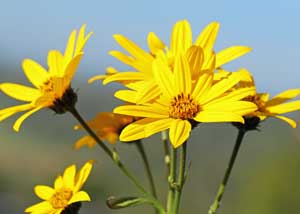
Helianthus tuberosus
Helianthus tuberosus, the Jerusalem artichoke, from the mint family, originated in Central America and was brought to Europe in the 17th. century, where it was grown both for human consumption and for animal feed. Inulin, an ingredient of Jerusalem artichokes, cannot be digested. Taken with water before meals, Jerusalem artichokes swell in the stomach and thus reduce feelings of hunger.
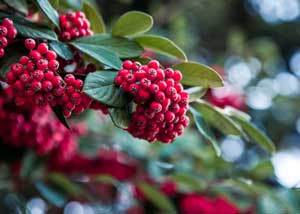
Ilex paraguariensis
Ilex paraguariensis from the family of holly plants, widely known as the mate tree, comes from South America. Since the 19th. Century, the mate tree has been cultivated for its healing properties. Its leaves are used for making tea which has an uplifting effect. It is also a source of energy during periods of fasting.
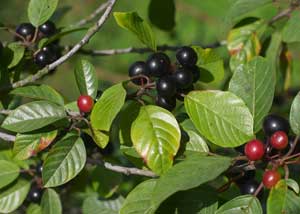
Rhamnus frangula
Rhamnus frangula, alder buckthorn, from the family of cross-thorn plants, is an old medicinal plant that has long been used as a purgative or laxative. During a fasting cure when the colon is no longer active, there is a danger that fermenting food will putrefy. Small doses of laxative can help the intestines remain healthy during such periods.
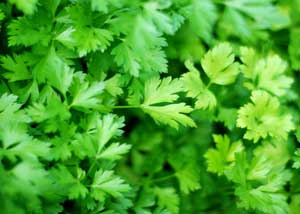
Petroselinum crispus
Petroselinum crispus, crucifer, cross-mint or parsley has an equally long tradition as a spice-like medicinal plant. It is principally known for its diuretic properties, which can be useful in conjunction with a fasting cure.
Fucus vesiculosus
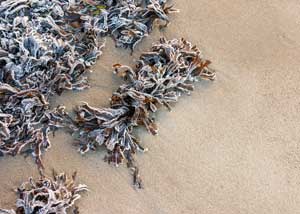
Fucus vesiculosus, bladderwrack, a member of the fucaceae family, is a species of algae found in the North Atlantic and in the North and Baltic Seas. It has a high iodine content which can promote an increase in the function of the thyroid gland and this reduces feelings of hunger. To avoid an overdose of iodine in Figurin, bladderwrack is used in the homeopathic potency D2.
Effect and application
Owing to its described composition, Figurin is a suitable medication for the overweight in combination with a fasting cure as it reduces feelings of hunger yet maintains a stable metabolism.
Dosage
The dosage of the herbal mother tincture is 3 x daily 20 drops taken 30 minutes before meals for best effect to provoke the feeling of being full.
Application restrictions
People who are allergic to one of the medicinal plants contained in Figurin should avoid using the product. Equally, those with thyroid diseases are advised to not use the preparation.
Pregnancy and lactation
Women are not allowed to use the product during pregnancy and lactation.